
Posted by Gabriel Brangers on Aug 28th 2026
GETTING YOUR FIREARMS READY FOR HUNTING SEASON
Every hunter has some version of this story. You pull the rifle out of the safe a week before season and something's off. Maybe there's a thin haze of surface rust on the barrel. Maybe the scope's holding a zero from two seasons ago that nobody bothered to check. Maybe you open the door and realize you genuinely can't remember the last time you looked at what's actually in there.
None of that is a big deal, if you catch it in time. The problem is never the rust or the zero or the clutter — it's timing. So let's talk about what actually needs your attention before opening day, and why “give it a wipe-down and hope for the best” isn't really a plan.
Rust Moves Faster Than You'd Think
Corrosion doesn't need much time to get started. Left in the wrong conditions, bare steel can start showing rust in about a week — an uncomfortable fact if your rifle spends eleven months a year sitting untouched in a safe.
The senior curators at the NRA's National Firearms Museum — people whose entire job is keeping irreplaceable historic firearms rust-free — target one range:
You don't need to get fancy to hit that range. A basic hygrometer — the small gauge that reads temperature and humidity — costs about as much as a box of premium ammo, and it's the only way to actually know what's happening inside your safe instead of guessing. From there, two real options:
Plug in and gently warm the air inside your safe — the Golden Rod is the classic — keeping moisture from settling on metal.
No power needed. Absorbs moisture until saturated, then recharges in a day or two. Many hunters keep two in rotation — one working, one recharging.
Ten-second habit: the oils on your skin are mildly corrosive to bare metal. Every time you handle a rifle — at the range, during cleaning, whatever — wipe it down with a silicone cloth before it goes back in the safe.
Get To The Range Before You Need To
If you haven't fired your rifle since last season, its zero is a question mark, not a fact. Optics shift. Mounts loosen slightly over time. Even a rifle that's done nothing but sit in a safe can walk off zero from ordinary vibration and temperature swings.
Confirming zero isn't complicated: get to a bench, check where it's actually hitting, and don't assume last year's dial-in still holds. It's the one step people skip when they're short on time — and skipping it is exactly how a rifle that “should” be dead-on turns into a bad shot at 200 yards on the one morning it actually counts.
Know The Rules Before You Load The Truck
If your season takes you across state lines, this part matters as much as anything mechanical. Federal law — the Firearm Owners Protection Act of 1986, usually just called FOPA — gives you real protection when transporting firearms through states with stricter laws than your own. But only if you follow it exactly.
Skip any one piece and the protection can be voided entirely.
FOPA also has real limits. It won't protect you if the firearm itself is illegal at your destination, and a few states — New York and New Jersey most often — have a documented history of not fully honoring it even when travelers are in full compliance. The NRA's own legislative arm has issued specific advisories warning travelers about this. If your route runs through a state with that reputation, a quick call to that state's wildlife agency or attorney general's office before you leave is a lot cheaper than finding out the hard way.
This section covers general firearm transport law for informational purposes only. State and local laws vary and change — confirm current requirements for your specific route with the relevant state agency before you travel.
The Part Nobody Thinks About Until It's A Problem: Space
Here's the thing about hunting season: it's rarely just one more rifle. It's a rifle, plus a spotting scope, plus a rangefinder, plus a new box of ammo because the old stuff had been sitting for three seasons, plus whatever you picked up at the gun show back in March.
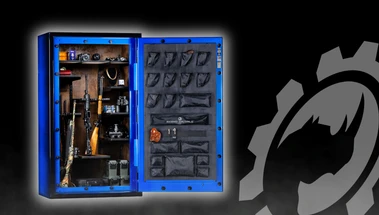
Before the season hits, it's worth actually opening your safe and looking at it honestly. If you're doing that familiar shuffle — rearranging three rifles just to get one out cleanly — that's not a storage technique, that's a warning sign. A safe that's genuinely full makes it harder to store things the way you should: guns not touching, proper spacing for airflow, nothing crammed in wrong.
That's the checklist: rust, zero, the law, and space to actually store things right.
If you've got a system that works better for you, we'd genuinely love to hear it.